What we mean by intensive neurological rehabilitation
Gaitway brings together Conductive Education and specialist neurological physiotherapy as a single programme, delivered often enough to change what a child can do. Taken together, that is best described as intensive neurological rehabilitation — and the three words carry the meaning:
- Intensive — the amount of practice, which the evidence identifies as the deciding factor.
- Neurological — grounded in how the brain forms and strengthens movement patterns.
- Rehabilitation — therapeutic, goal-directed and functional, aimed at everyday life.
Conductive Education remains at the heart of it, and we will always name it. It sits inside a fuller description of what a child actually receives.
The two components
Both run as part of one blended programme, not as separate appointments.
- Conductive Education — the Pető method. Movement taught as something a child learns, with physical, thinking and social development in one structured programme.
- Neurophysiotherapy — specialist neurological physiotherapy, working on strength, alignment and movement patterns.
Conductive Education remains at the heart of what we do, and we will always name it. It sits inside a fuller description of what a child actually receives.
How it works at Gaitway
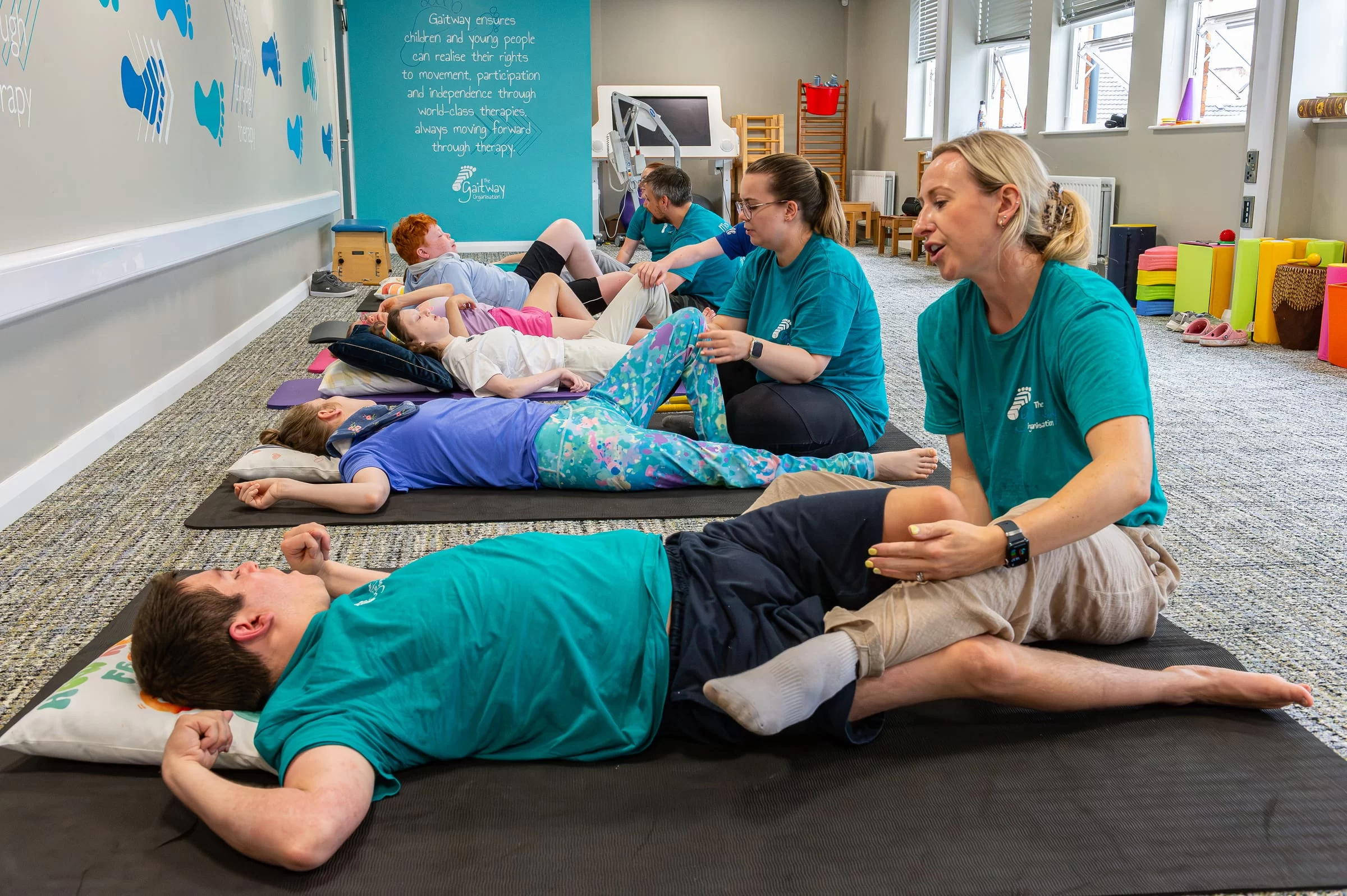
Sessions are:
- Goal-focused — built around tasks that matter to your child and family, from joining in at playtime to managing more of their own daily routine.
- Active, not passive — your child initiates the movement and solves the problem. They are not moved through it by someone else.
- Structured and repeated — children practise the right movements often, which is how new skills become lasting.
- Encouraging and often group-based — children learn alongside others, building confidence, motivation and a sense of belonging.
What the research says
We would rather set out the evidence plainly, including the parts that need explaining.
Intensity is the deciding factor. A 2025 systematic review examined 18 Conductive Education studies across 11 countries. Among the more robust studies, 67% reported positive outcomes — and the difference between the programmes that worked and those that did not was how much practice children received. Studies showing gains averaged around 25 hours a week. Studies showing no effect averaged closer to 18 hours.2
The finding is not that Conductive Education fails. It is that Conductive Education delivered thinly does not produce measurable change. This is why Gaitway runs concentrated programmes rather than occasional sessions.
The same review found the strongest results in spastic cerebral palsy, particularly spastic diplegia — which matters here, because spastic presentations account for the large majority of cerebral palsy recorded on the Northern Ireland Cerebral Palsy Register.3
On the “traffic light” ratings. The most widely cited review of cerebral palsy interventions sorts them green, yellow or red.1 Conductive Education is rated yellow, and that is sometimes misread as a warning. The authors are explicit that it is not:
“Yellow coding prompts the measurement of individual treatment outcomes and does not imply caution or ineffectiveness.”
Yellow means measure the outcomes — which is what a serious programme should do anyway. Meanwhile the interventions rated green — goal-directed training, task-specific training, strength training — share the same principles as our work: active, intensive, and requiring the child to initiate movement. The approaches rated red are the passive, hands-on ones where therapy is done to a child rather than by them.
That is the distinction we build our programmes around, and it is why we measure progress rather than assume it.
Why it matters for families
This approach treats your child as a whole person — not just their muscles. Children work towards real, everyday goals (sitting, standing, dressing, joining in), often in a group, which builds confidence and independence alongside physical skill.